How can a construction or trades company turn completed projects into useful website content?
For construction and trades companies, every completed project represents an opportunity to show prospective clients what the business can do. Whether it is a commercial renovation, industrial installation, new construction project or specialized repair, the work itself can provide valuable material for a company's website.
Many businesses already take photos, document progress and keep records throughout a project. However, that information often stays in internal files or gets shared briefly on social media before being forgotten. Turning completed work into detailed project stories gives that content a longer life and helps potential customers understand the company's experience.
A well-written project story does more than show the finished result. It explains the challenge, describes the work completed and demonstrates how the company helped bring the project to completion.
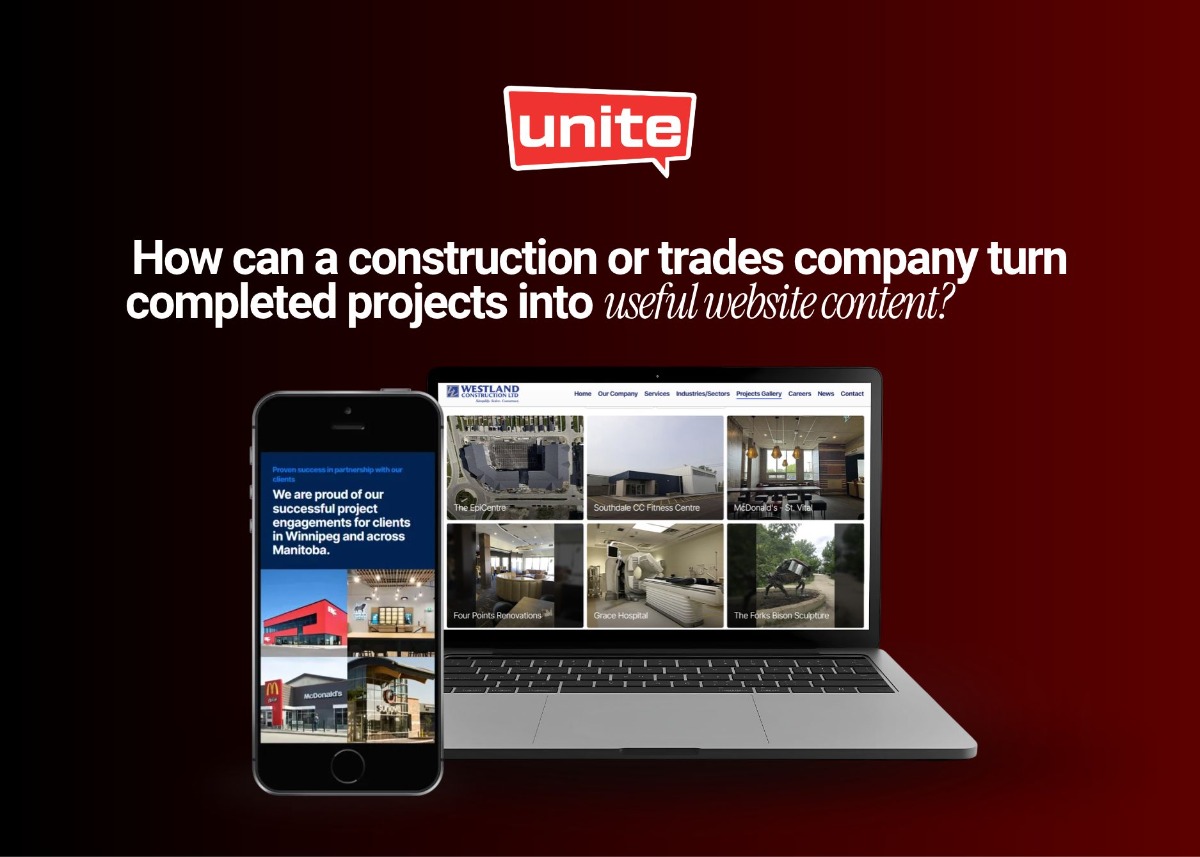
Start with the challenge behind the project
A useful project story begins by explaining what the client needed and what made the project important.
Instead of opening with a general statement about the work, provide some context. Was the client dealing with an outdated facility, limited space, an equipment issue, a construction deadline or a particular technical requirement? Was the project part of a larger development or an upgrade to an existing property?
This information helps readers understand the circumstances surrounding the work. It also allows prospective clients to recognize situations similar to their own.
For example, an electrical contractor could describe a project involving the electrical upgrades required for an expanding commercial facility. A mechanical company might explain how it approached replacing an aging HVAC system in an occupied building. A general contractor could outline the requirements involved in completing a renovation while keeping parts of the property operational.
The goal is to explain the problem in a way that makes sense to someone who may not have a technical background. This gives the project a clear purpose and helps demonstrate the company's ability to understand client needs.
Explain the work completed and the company's role
Once the challenge is established, the next step is to explain how the company approached the project.
This is where a business can demonstrate its actual capabilities. Describe the services provided, the scope of work, the equipment or materials involved, and any specific requirements the team had to account for.
It is also important to clarify the company's role. For example, was the business responsible for the entire project, a specific trade, installation work, project management or a specialized component? Being clear about this helps avoid giving prospective clients the wrong impression about the company's experience.
Where relevant, explain how the work was coordinated with other contractors, how site conditions were addressed or how the team worked around operational requirements. These details can help demonstrate practical experience that may not be obvious from a finished project photo.
A project story does not need to include every technical detail. It should provide enough information for readers to understand the work involved and why the company's experience matters.
Show the finished result
The completed project is often the most visually interesting part of the story, but it should also communicate something meaningful.
Professional photographs can show the finished installation, building, renovation or repair. Before-and-after images can help illustrate the difference the work made, while progress photos can give readers a better understanding of the process.
Where appropriate, include measurable details that help explain the scale or outcome of the project. This could include the size of the facility, the number of units installed, the area renovated, the equipment upgraded or the scope of the construction work.
If the client has provided feedback or there are documented performance improvements, these can also help demonstrate the value of the completed work. Avoid making claims that cannot be verified, particularly when discussing savings, efficiency improvements or project timelines.
The result should give prospective clients a clear picture of what the company delivered, rather than relying on broad statements about quality or customer satisfaction.
Make project stories useful for search engines
Completed projects can also contribute to a company's search engine visibility.
When a project page includes clear information about the work, services, industry and location, it gives search engines more context about what the company does and the types of projects it handles.
For example, a page describing a commercial HVAC installation in Winnipeg can provide more relevant information than a photo gallery with a title such as "Recent Project."
Project descriptions should use natural language that reflects how potential customers search for services. Include relevant service terms and geographic information where appropriate, but avoid forcing keywords into every sentence.
It is also worth giving project images descriptive file names and alternative text. Instead of uploading an image with a generic file name, use a description that identifies what the image actually shows. This can improve accessibility and provide additional context about the visual content.
Over time, a collection of detailed project pages can help establish a stronger website presence around the services and industries a company wants to reach.
Repurpose project content across other marketing channels
A completed project does not have to appear on the website only once. The information and visuals can be used across several marketing channels.
A detailed project story can become a shorter LinkedIn post, a series of social media updates, a newsletter feature or a short video. Progress photos can be used to show different stages of the work, while finished project images can help promote specific services.
The website should remain the central place where the complete project story lives. Social media and email can then direct interested audiences back to the website for more information.
This approach also helps businesses get more value from the time spent documenting their work. Rather than creating entirely separate content for every platform, one completed project can provide material for several useful marketing pieces.
Turn completed work into a stronger online presence
Construction and trades companies spend considerable time building their reputations through the projects they complete. Their websites should reflect that experience.
Project stories help connect the company's services to real examples of its work. They show prospective clients the types of challenges the business can handle, explain the work involved and provide evidence of its capabilities.
For companies with a growing portfolio, this content can become one of the most useful parts of the website. It supports service pages, strengthens search visibility and gives potential customers more information when comparing contractors or trades providers.
At Unite Interactive, we help construction and trades companies bring their experience to life through strategic website design, content development, SEO and professional photography and video. With more than 25 years of experience working with businesses across Canada, the United States and beyond, we understand the importance of building websites that communicate what a company does and demonstrate the value of its work.
If your company has completed projects worth showcasing, your website should make it easy for prospective clients to see them.
Contact Unite Interactive Today to Book a FREE Strategy Session

Unite Interactive is a top Canadian website design and digital marketing agency based in Winnipeg and Vancouver with resources throughout the globe.
